Who this guide is for
Start here if you still use a notebook or spreadsheet, or if you've already wasted time looking for the origin, parents or date laid.
Start with a ready-made template
Download the editable spreadsheet with tabs for birds, pairs, clutches, eggs, and transfers, or print the PDF record sheet. No sign-up required.
Step-by-step process
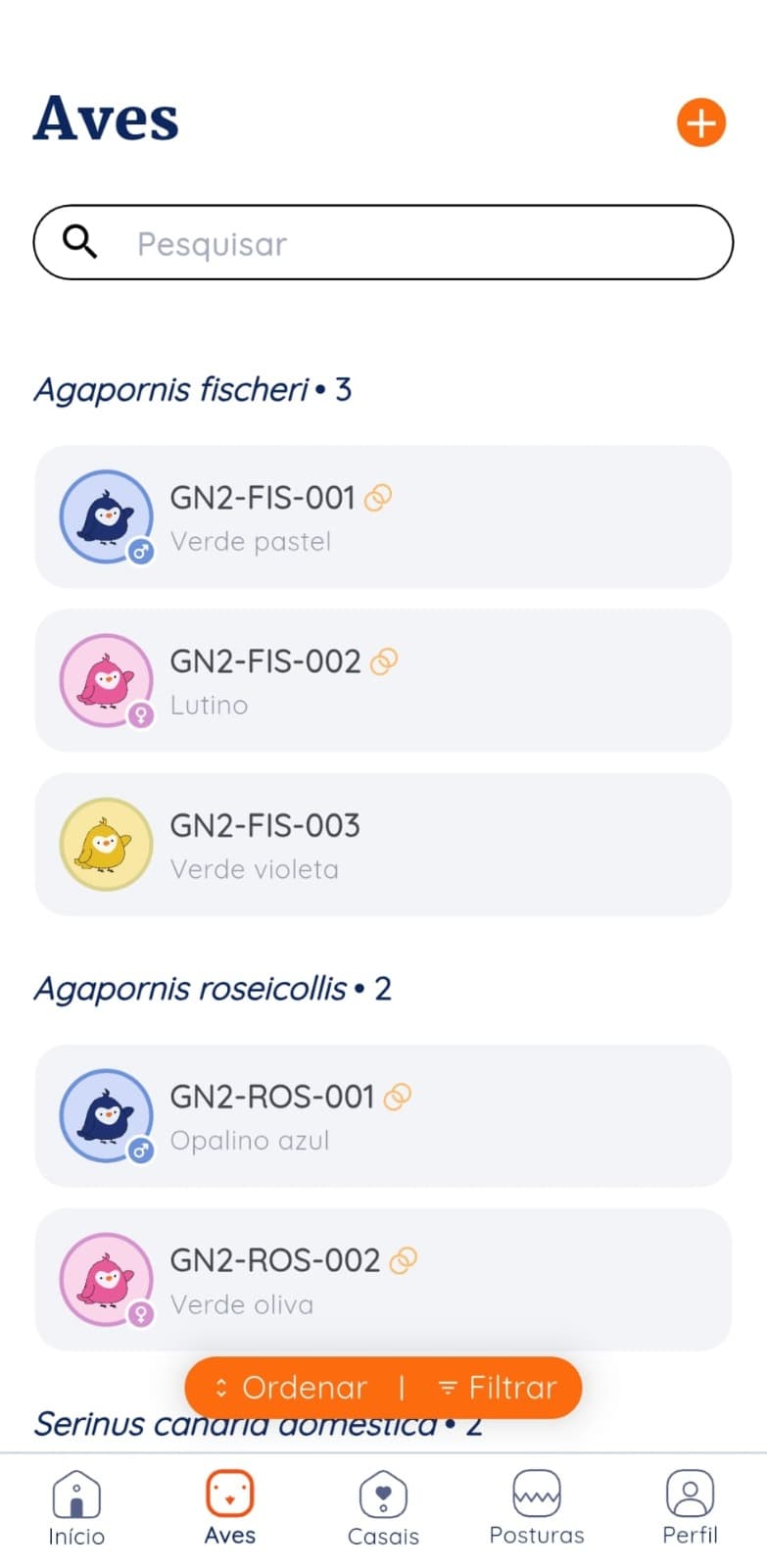
Give each bird a stable identity
Choose an identifier that does not depend on the bird's pet name. A leg-band number works well when available, but the record also needs to work before banding.
Save species, sex when known, mutation or variety, date of birth, origin, current location and status. Use “unknown” when the data has not yet been confirmed; do not fill in by guesswork.
- Unique internal identifier
- Leg-band number and issuing organization, when applicable
- Species and common name used in your breeding stock
- Sex, mutation, origin, location, and status
Record the breeding pair once and reuse the relationship
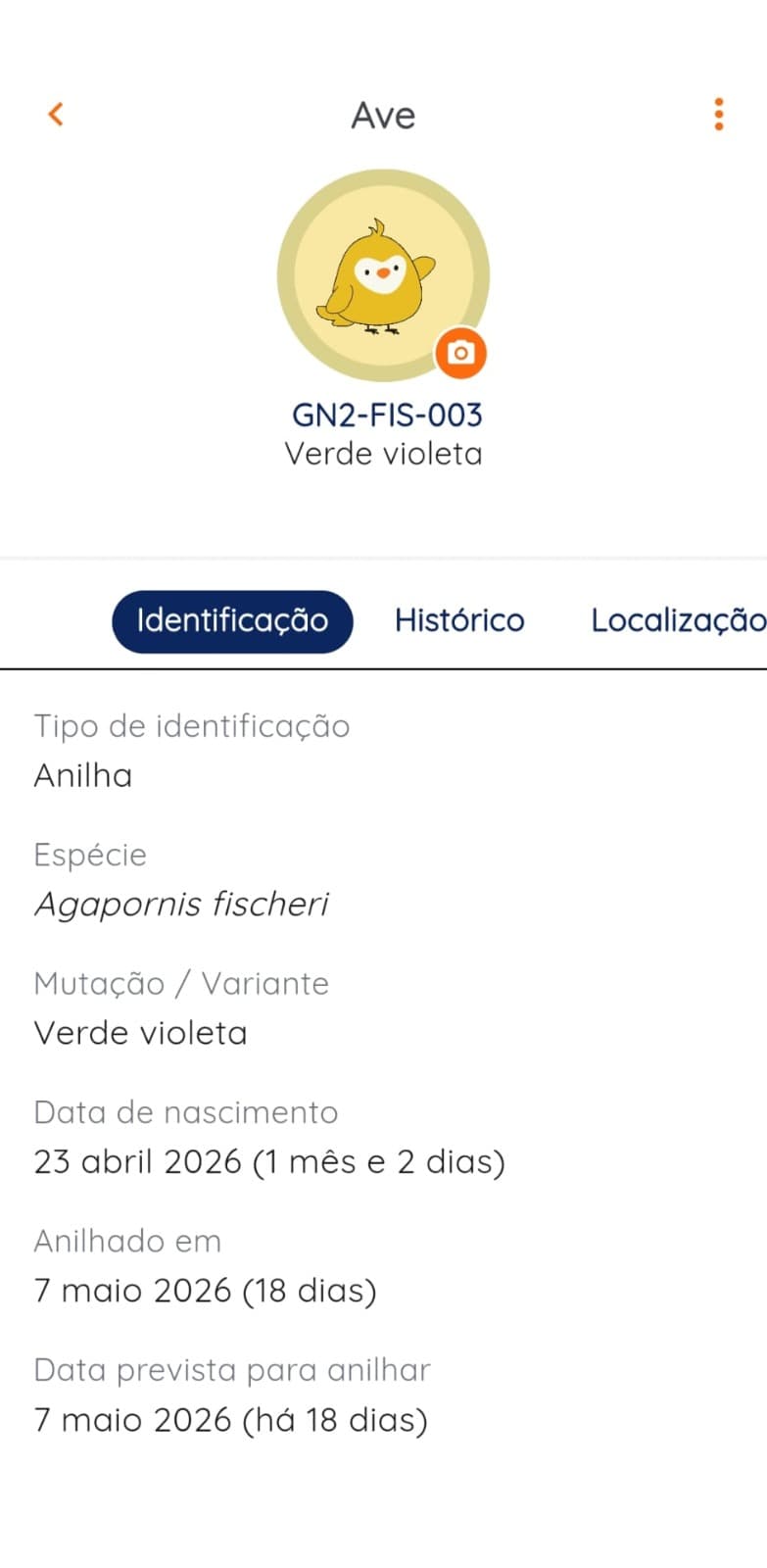
Do not copy the male and female names onto every new sheet. Create one breeding-pair record and associate all its clutches with it. Correcting a parent's identity then updates the relationship without editing dozens of rows.
The breeding-pair record should include its active period, location, notes, and results. If one partner changes, close the previous pairing and create a new one; do not overwrite the history.
Separate clutch, egg, and chick
A clutch, an egg, and a chick are different record types. The clutch represents the breeding event; every egg has its own status and dates; every chick becomes a bird record linked to its parents.
This separation avoids confusing transferred eggs, different hatching dates or chicks from nearby clutches.
- Clutch: breeding pair, start date, nest, and notes
- Egg: order, date, status and result
- Chick: bird record, parents, birth and ring
Build a timeline, not an infinite notepad
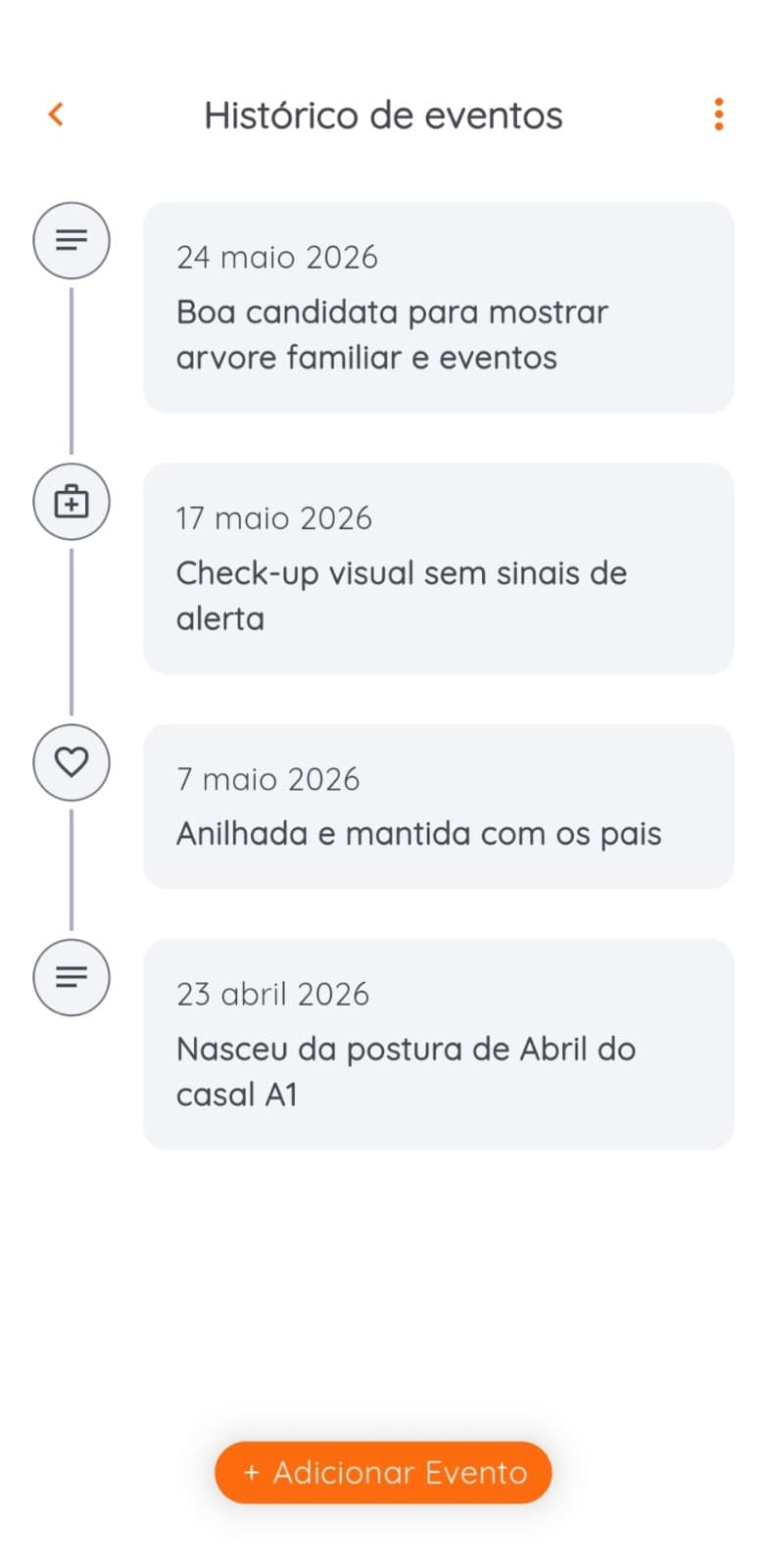
Use dated events for location changes, pair formation, laying, hatching, banding, observations, and transfer. A note without a date loses context; a dated event allows us to reconstruct the sequence.
For corrections, preserve the original value when it is relevant for audit and explain the reason for the change.
Define when the spreadsheet is no longer sufficient
Notebooks and spreadsheets are not mistakes. A notebook may be enough for a few birds; a spreadsheet is cheap, flexible and easy to adapt.
The change signal appears when you start duplicating data, searching for the same bird in multiple tabs, reconstructing kinship manually or relying on colors and memory to know the status of each clutch.
Fictional example: from bird to history
Female BR-26-014 belongs to breeding pair C-07. Clutch P-07-03 contains four eggs; the second hatched as chick BR-26-041. The chick remains linked to both parents without copying the pedigree by hand.
- Dam
- BR-26-014 · King canary · female
- Sire
- BR-25-088 · King canary · male
- Breeding pair
- C-07 · active since 06/12/2026
- Clutch
- P-07-03 · started on 08/02/2026
- Egg
- Egg 2 · hatched on 08/17/2026
- chick
- BR-26-041 · linked to both parents
Setup checklist
- Each bird has a unique identifier.
- Parents and couples are relationships, not repeated text.
- Each clutch and each egg has its own record.
- Dates are date values, not single sentences.
- Important changes enter the timeline.
- Transfers preserve origin and destination.
- There is a tested backup.
Common mistakes and how to avoid them
Use the bird's name as a key
Names repeat and change. Use a stable identifier and keep the name as a descriptive field only.
Mix all the eggs in a single observation
Results and dates may differ. One record per egg preserves individual tracking.
Delete old relationships
Changing a partner does not erase the previous breeding pair. Close that pairing and preserve its history.
Treat the spreadsheet as a backup
A file on the same cell phone or computer is not a backup copy. Keep another copy and test the restore.
Sources and limitations
These sources provide context for the method and the Brazilian market. They do not make this article veterinary or legal advice.
- IBAMA: Amateur passerine breeding (SisPass)Official context on the wild passerine control system; does not replace guidance from the state agency.
- Brasília Ambiental: services and registrations on SisPassOfficial examples of operations that depend on identification, sex, rings and transfers.
Keep every record linked to Gudnest
Organize birds, parents, couples, clutches, eggs, chicks and history in a single flow.
Get to know Gudnest