When might the eggs hatch?
For cockatiel, the consulted source indicates a window of 18 to 21 days.
Choose a date to see the estimated window.
This is a planning estimate, not a guarantee or a prediction for each egg. Eggs laid later may hatch after this window. The count begins at the observed incubation, which may occur after the first egg is laid.
What this estimate means
For cockatiel breeders who record when the parents started incubating and want to plan for the first hatch without confusing the window with a per-egg forecast.
How to use the calculator
Identify when incubation became regular
Cockatiels may begin incubating after several eggs are already in the nest. Use the first date you observed a parent sitting on the eggs regularly, not today's date.
Read the full range
The tool adds 18 and 21 days to the date entered. Showing both limits is more accurate than presenting one date as certain.
Record each actual hatch
The eggs may have been laid on different days. The window helps plan the first hatch; later eggs may hatch after that window. Record the observed hatch date for each egg.
Example of a cockatiel window
If regular incubation started on September 1st, the calculated window will be:
- Observed start
- September 1
- Start of window
- September 19
- End of window
- September 22
Before using the result
- Confirm the scientific name Nymphicus hollandicus.
- Use the observed start of incubation; do not assume it began with the first egg.
- Keep a specific date for each egg.
- Replace the estimate with the observed hatch date.
Common mistakes and how to avoid them
Count from the first egg without observing the parents
If regular incubation began later, the estimated hatch window will be too early. Record the clutch dates and the observed start of incubation separately.
Expect the entire clutch on the same day
Eggs are laid in sequence. A clutch-level window does not remove the need to track each egg.
Use the calculator as a diagnosis
The tool organizes dates; it does not assess fertility, embryo development, or the birds' welfare.
Sources and limitations
These sources provide context for the method and the Brazilian market. They do not make this article veterinary or legal advice.
- Lafeber: cockatiel incubation countGuidance from a veterinary team: 18 to 21 days from the beginning of incubation of the eggs.
- Avian Medicine: selected incubation periodsVeterinary table identifying selected species and groups, including cockatiel, ring neck, canary, pigeon and budgerigars.
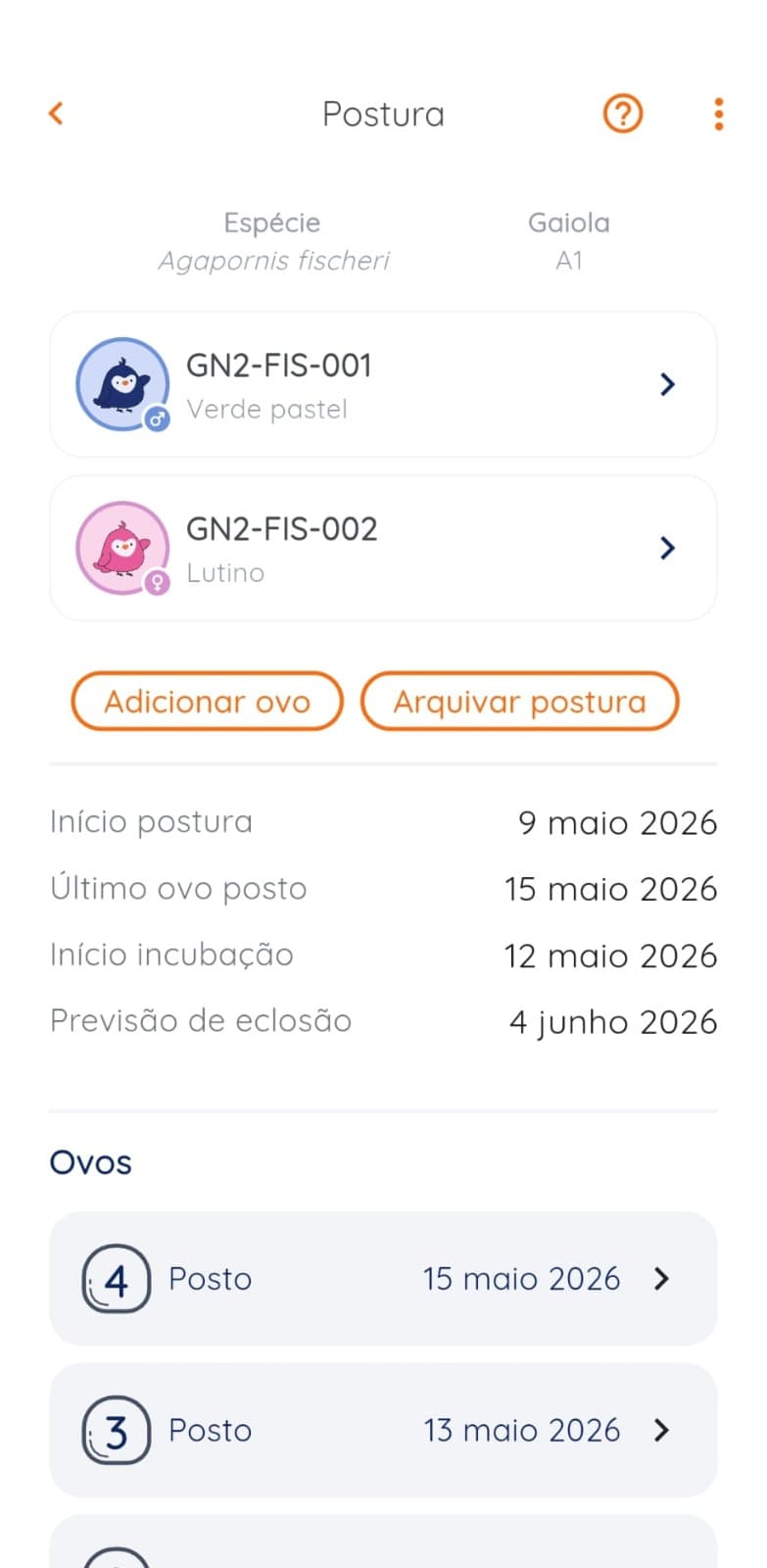
The calculator gives the window. Gudnest keeps the history.
Use the calculator without signing up. To track birds, pairs, clutches, eggs and hatching events over time, use the Gudnest app.
See how Gudnest works