When might the eggs hatch?
For rosy-faced lovebird, the consulted source indicates a window of 22 to 23 days.
Choose a date to see the estimated window.
This is a planning estimate, not a guarantee or a prediction for each egg. Eggs laid later may hatch after this window. The range belongs to rosy-faced lovebird and should not automatically be applied to other lovebird species.
What this estimate means
For rosy-faced lovebird breeders who want a concise hatch window based on the correct species and the observed start of incubation.
How to use the calculator
Confirm the species before calculating
Use the scientific name rosy-faced lovebird. The calculator does not assume that all species of the Agapornis genus share the same range.
Mark the observed start
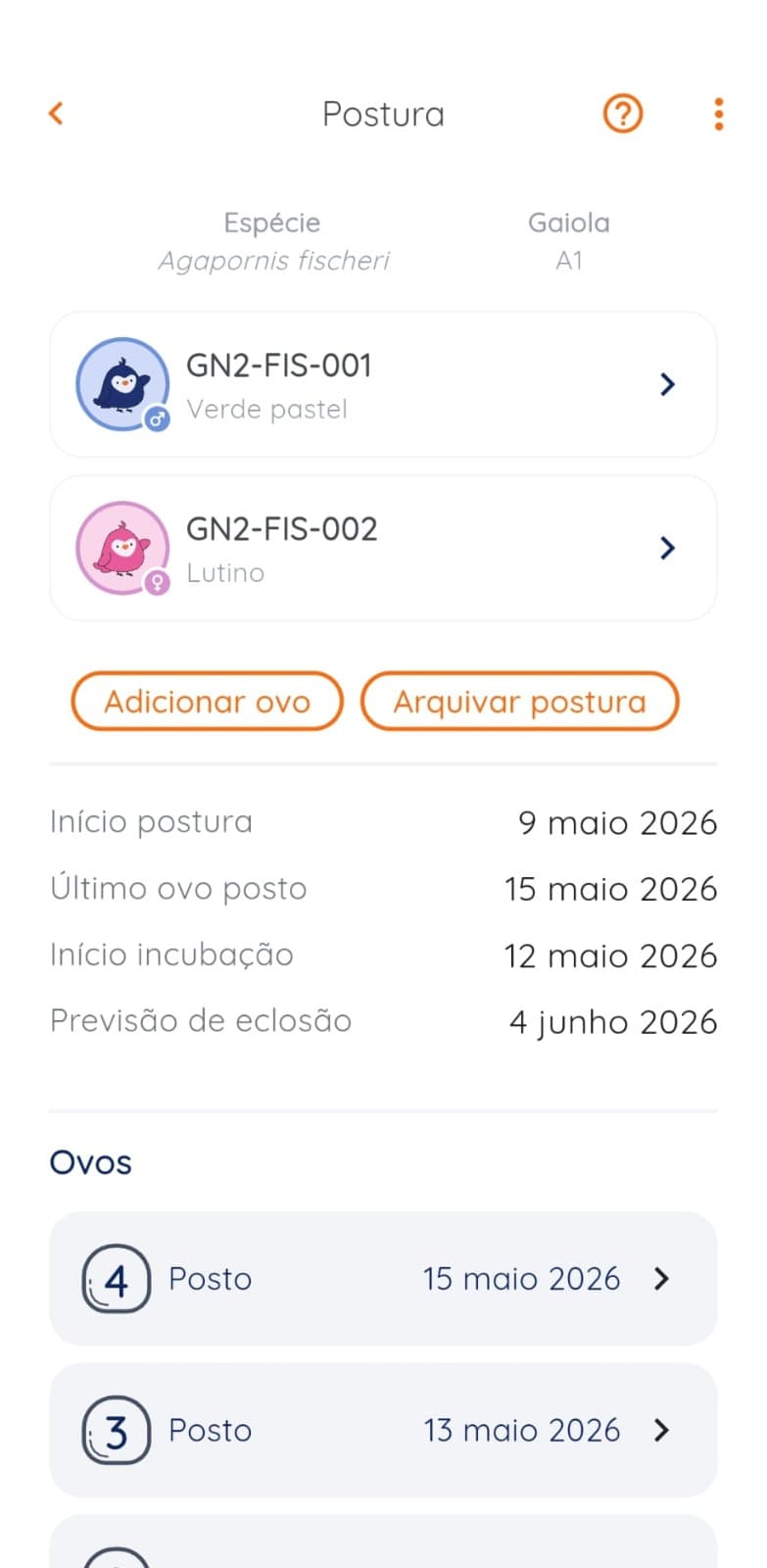
Record the first day the female began incubating regularly. Keep the date each egg was laid in a separate field to preserve the sequence.
Observe the two-day window
The tool shows days 22 and 23 after the reported start. This window comes from specific literature, but remains an estimate.
Example for the rosy-faced lovebird
Starting on September 1st, the estimated window will be:
- Observed start
- September 1
- Start of window
- September 23
- End of window
- September 24th
Before using the result
- Confirm rosy-faced lovebird, without generalizing by genus.
- Keep clutch and start of incubation in separate fields.
- Read 22 to 23 days as a range, not a guarantee.
- Record the actual hatching of each egg.
Common mistakes and how to avoid them
Apply the period to any lovebird
The evidence used identifies rosy-faced lovebird. Another species requires its own reference.
Predict the whole clutch by the first egg
The female lays eggs in sequence. Preserve the individual date of each egg even when using a common reference for incubation.
Turn two days into certainty
A narrow window remains subject to actual observation. The calculator does not confirm fertility or development.
Sources and limitations
These sources provide context for the method and the Brazilian market. They do not make this article veterinary or legal advice.
- Bucher and Barnhart: development of rosy-faced lovebirdScientific article that identifies the species and describes an incubation period of 22 to 23 days.
- Animal Diversity Web: rosy-faced lovebirdUniversity source that describes around 23 days and contextualizes the clutch on alternate days.
The calculator gives the window. Gudnest keeps the history.
Use the calculator without signing up. To track birds, pairs, clutches, eggs and hatching events over time, use the Gudnest app.
See how Gudnest works