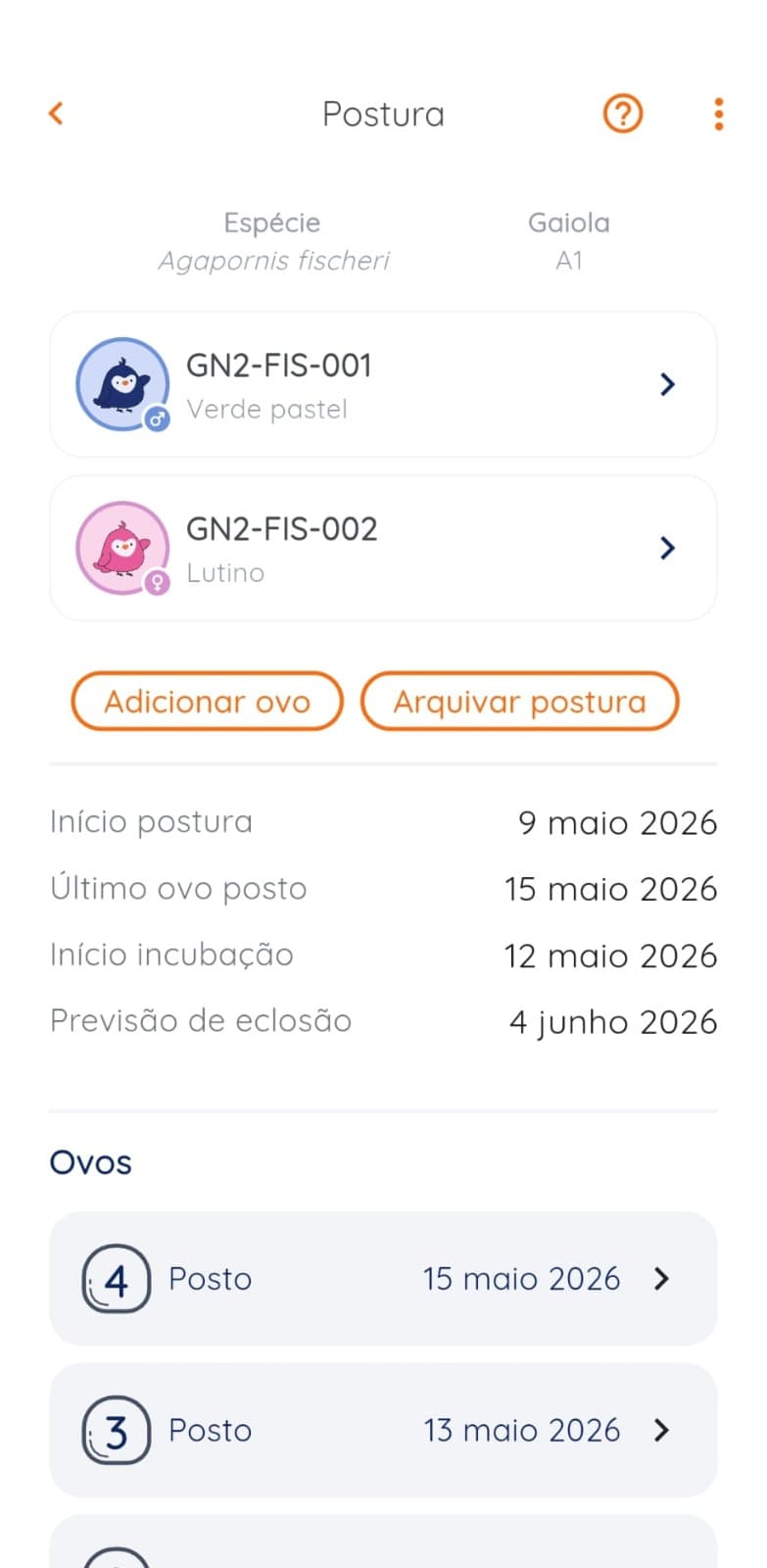
When might the eggs hatch?
For domestic pigeon, the consulted source indicates a window of 17 to 19 days.
Choose a date to see the estimated window.
This is a planning estimate, not a guarantee or a prediction for each egg. Eggs laid later may hatch after this window. Males and females can share incubation; record observation of clutch, not just the presence of one of the adults.
What this estimate means
For domestic pigeon breeders who need to plan the first hatch while tracking both parents' incubation and each egg's identity.
How to use the calculator
Confirm Columba livia
Domestic pigeon is the name used here for Columba livia. Do not automatically apply this incubation range to other pigeon or dove species.
Observe both parents, not just one bird
Incubation can be divided between male and female. Mark when the clutch began to be incubated regularly, even if the adult in the nest changes.
Plan 17 to 19 days
The calculator shows both published limits. Once an egg hatches, record the actual hatch date instead of extending the estimate.
Example for domestic pigeon
If regular incubation was first observed on September 1, the window will be:
- Observed start
- September 1
- Start of window
- September 18
- End of window
- September 20th
Before using the result
- Confirm Columba livia.
- Observe how both parents share incubation.
- Keep eggs identified.
- Record the actual hatch, not just the predicted one.
Common mistakes and how to avoid them
Use the range for any pigeon or dove species
The table distinguishes domestic pigeon, wood pigeon and dove. This window belongs to Columba livia.
Restart the count when the incubating adult changes
A change of the incubating parent does not create a new clutch. Keep the first day regular incubation was observed.
Save only one date for both eggs
Even in a small clutch, each egg needs its own identifier and observed hatch date.
Sources and limitations
These sources provide context for the method and the Brazilian market. They do not make this article veterinary or legal advice.
- Avian Medicine: selected incubation periodsVeterinary table identifying selected species and groups, including cockatiel, ring neck, canary, pigeon and budgerigars.
- NatureServe Explorer: Columba liviaConservation base that presents 17 to 19 days and informs that both sexes incubate.
The calculator gives the window. Gudnest keeps the history.
Use the calculator without signing up. To track birds, pairs, clutches, eggs and hatching events over time, use the Gudnest app.
See how Gudnest works