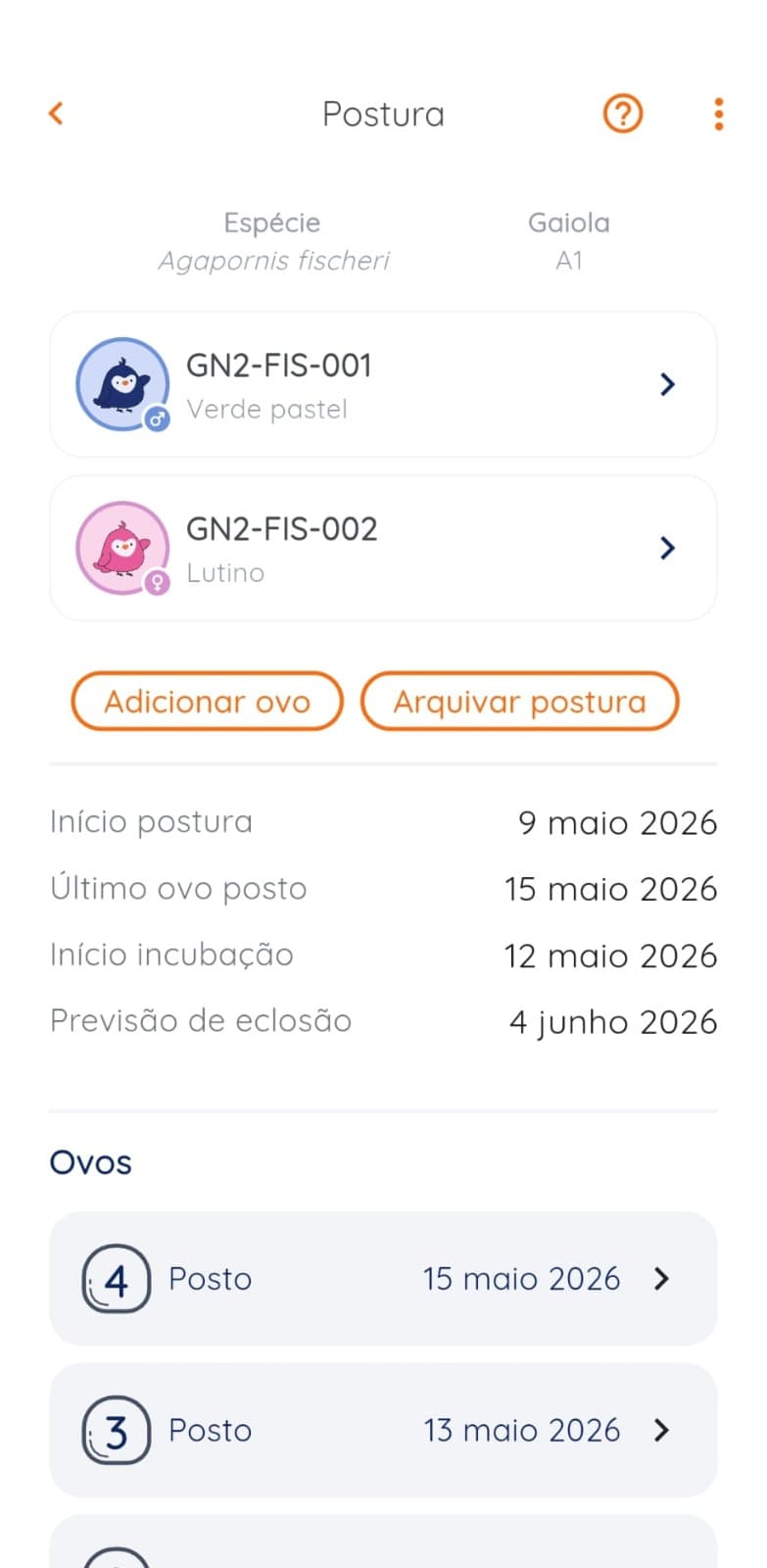
When might the eggs hatch?
For Fischer's lovebird, the consulted source indicates a window of 21 to 23 days.
Choose a date to see the estimated window.
This is a planning estimate, not a guarantee or a prediction for each egg. Eggs laid later may hatch after this window. The reference is specific to Fischer's lovebird; do not reuse this window for other species in the genus.
What this estimate means
For fischeri breeders who keep several lovebird species and need to prevent a prediction from being copied between them.
How to use the calculator
Differentiate fischeri from other lovebirds
Choose Fischer's lovebird in the selector. Roseicollis and personatus are not alternative names and should not automatically inherit the same window.
Observe when incubation became continuous
Record the date the female started incubating regularly. The clutch may contain several eggs laid on different days.
Plan between the 21st and 23rd
Use the interval to anticipate the first hatch. Continue to monitor subsequent eggs even after the first hatchling.
Example for Lovebird fischeri
With incubation observed on September 1st, the calculated reference will be:
- Observed start
- September 1
- Start of window
- September 22
- End of window
- September 24th
Before using the result
- Confirm Fischer's lovebird.
- Do not reuse the roseicollis window.
- Record laying and incubation separately.
- Keep each egg identifiable.
Common mistakes and how to avoid them
Select only by name agapornis
The genus brings together different species. The evidence on this page identifies fischeri specifically.
Stop observation after the first hatching
Eggs are laid in sequence. The remaining eggs may need more time and should stay linked to the same clutch history.
Use 23 days as a promise
The published reference is a range of 21 to 23 days. The calculator preserves this variation.
Sources and limitations
These sources provide context for the method and the Brazilian market. They do not make this article veterinary or legal advice.
- Animal Diversity Web: Fischer's lovebirdUniversity source that identifies the species and has an incubation period of 21 to 23 days.
- Avian Medicine: selected incubation periodsVeterinary table identifying selected species and groups, including cockatiel, ring neck, canary, pigeon and budgerigars.
The calculator gives the window. Gudnest keeps the history.
Use the calculator without signing up. To track birds, pairs, clutches, eggs and hatching events over time, use the Gudnest app.
See how Gudnest works